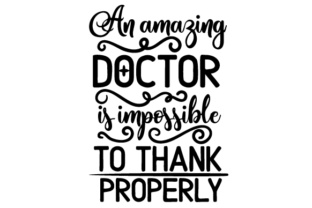
Reviewing the Doctor Tribute Embroidery Design
As a designer who has spent countless hours digitizing and stitching out files for clients, I have learned that not all digital assets are created equal. When I first pulled up An Amazing Doctor is Impossible to Thank Properly, my immediate goal was not just to admire the aesthetics, but to determine its viability for real-world production. For embroidery designers, small business owners, and Etsy sellers, the difference between a file that looks good on a screen and one that stitches out cleanly on fabric is the difference between a return request and a five-star review. This evaluation focuses on how this specific design performs in practical Crafts and commercial applications, particularly within the Medical niche where sentiment and professionalism must coexist.
First Impressions and Visual Personality
The phrase itself carries significant emotional weight. In the context of personalized gifts, especially for healthcare workers, the message needs to land with clarity and warmth. My first impression of An Amazing Doctor is Impossible to Thank Properly was that it leans heavily into typographic expression. The layout appears designed to be read quickly, which is crucial for items like tote bags or aprons that are viewed from a distance. The visual personality feels appreciative and respectful, avoiding overly cartoonish elements that might undermine the professional stature of a doctor. For a craft business owner, this means the design fits seamlessly into a boutique branding strategy that values sincerity over gimmicks.
When evaluating the shape and detail level, I looked for potential pitfalls in digitization. Complex curves in lettering can often result in jagged edges if the stitch count is too low or the angle changes are too abrupt. While I cannot verify the exact stitch density without loading the file into my software, the preview suggests a balanced approach. It does not appear overly dense, which is a positive sign for maintaining fabric drape, especially on softer materials like cotton blends used in sweatshirts or baby items.
Real-World Application Scenarios
To truly test the value of an embroidery file, you must imagine it on actual products. I envisioned using An Amazing Doctor is Impossible to Thank Properly for a custom embroidered tote bag intended as a holiday gift for a hospital staff member. Tote bags are popular because they are functional and offer a large, flat canvas. On a heavy canvas tote, this design would likely require a cut-away stabilizer to prevent puckering, given the length of the text. The horizontal layout works well here, allowing the message to span the width of the bag without crowding the handles.
Another strong use case is custom apparel, specifically a high-quality fleece zip-up or a structured cap. For sweatshirt embroidery, the texture of the fleece can sometimes swallow fine details. If this design relies on thin running stitches for outlines, it might get lost. However, if it utilizes satin stitch borders or adequate fill stitch coverage, it will pop against the textured background. For caps, the curved surface presents a challenge. I would advise placing this design on the front panel only if the hoop size allows for a wide enough arc without distortion. If the text is too long, it might wrap awkwardly around the curve, so checking the dimensions against your specific cap hoop is essential.
For those selling digital embroidery files, this asset serves as a versatile design asset for spring cleaning promotions or Nurse and Doctor appreciation weeks. It fits naturally into the category of personalized gifts that customers seek for graduation, retirement, or simple acts of gratitude. The versatility of the formats provided—SVG File, Transparent PNG, EPS, and DXF—means it is not limited to machine embroidery alone. Crafters can use the SVG for vinyl cutting on tumblers or the PNG for sublimation prints, expanding the product line for any small shop product.
Technical Considerations and Fabric Compatibility
While the design is charming, practical execution requires careful attention to fabric texture and stabilizer choice. Thin fabrics, such as lightweight polyesters or silks, are risky for text-heavy designs unless proper backing is used. I recommend testing the design on scrap fabric first, ideally using the same material you plan to sell. This helps you identify any pull or push compensation issues before committing to a finished product.
Thread color contrast is another critical factor. Since this is a text-based design, legibility is paramount. On dark fabric, light thread colors are necessary, but you must ensure the stitch density is sufficient to cover the base material completely. Conversely, on light fabric, darker threads provide sharp definition. I always suggest creating black and white mockups to check the silhouette of the design. If the letters blend together in a monochrome view, the design may lack the necessary spacing for clean stitching.
Special care is needed for stretchy fabrics like jersey knits used in t-shirts. Without a stable hooping method and possibly a tear-away or cut-away stabilizer depending on the garment's longevity requirements, the text could distort after washing. For items that need frequent washing, such as kitchen towels or aprons, ensuring the stitch density is not too high is vital to prevent the fabric from becoming stiff or perforated.
Enhancing Product Value and Brand Trust
Using a well-chosen design like An Amazing Doctor is Impossible to Thank Properly directly impacts customer trust and brand consistency. When a handmade product looks professional, with clean edges and no loose threads, it reinforces the perception of quality. For an Etsy seller, this translates to higher buyer engagement and repeat customers. The design’s clear message resonates emotionally, increasing the giftability of the item. Customers are not just buying an embroidered patch or a towel; they are buying a way to express gratitude that feels thoughtful and curated.
Furthermore, offering this design in multiple formats adds value for digital product sellers. By providing SVG, PNG, EPS, and DXF files, you cater to a broader audience of makers who may not own embroidery machines but still want to create Medical-themed crafts. This inclusivity can expand your market reach significantly.
Practical Designer Notes for Best Results
- Test Before Selling: Always stitch out a sample on your intended fabric. Check for thread breaks, nesting, or registration errors.
- Check Licensing: Confirm whether the license allows for commercial use of finished items. This is crucial for craft business operations.
- Optimize Hoop Size: Ensure your hoop size accommodates the full width of the text. If necessary, resize the design proportionally, but be cautious of making details too small to stitch cleanly.
- Stabilizer Selection: Use appropriate stabilizers. Cut-away for stretchy knits, tear-away for woven cottons, and wash-away for delicate or sheer fabrics.
- Thread Quality: Use high-quality embroidery thread to minimize breaks and ensure vibrant color retention after washing.
- Mockup Verification: Create printable mockups to visualize the design on different products before listing them in your small shop.
In conclusion, An Amazing Doctor is Impossible to Thank Properly is a solid addition to any designer’s library, provided it is executed with technical precision. It bridges the gap between sentimental messaging and professional presentation, making it ideal for a wide range of embroidery projects. By paying attention to fabric choice, stabilizer support, and stitch quality, you can transform this digital file into a cherished finished product that honors the hard work of medical professionals.